





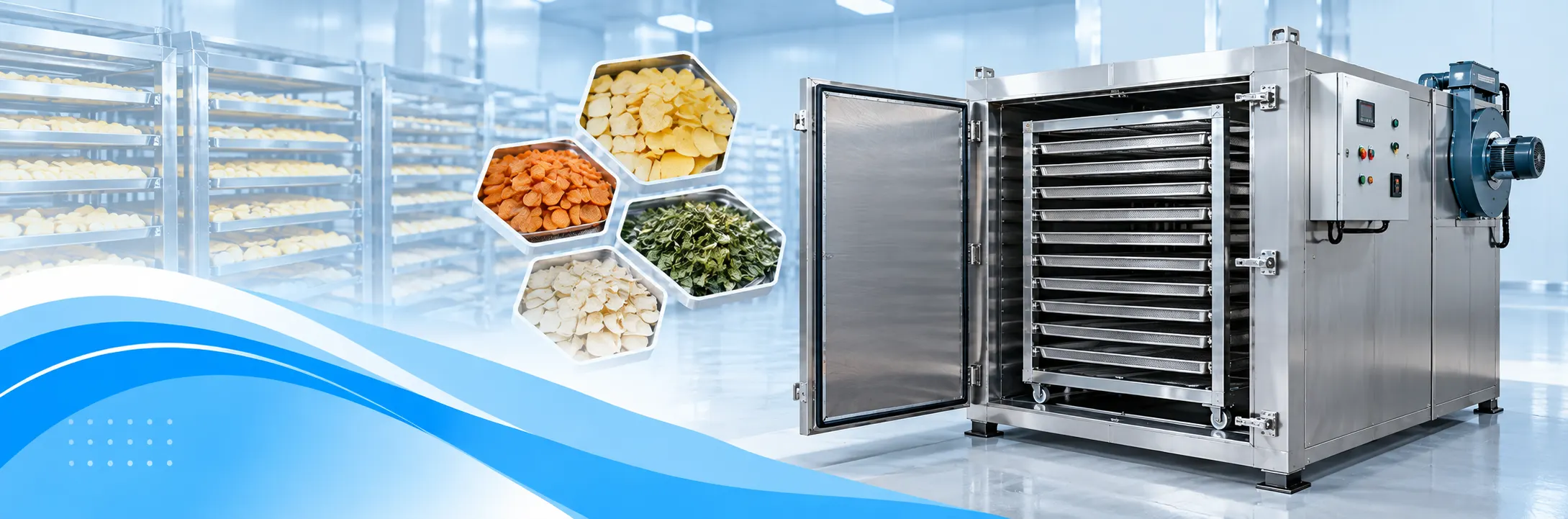
An Industrial Tray Dryer is drying equipment used to remove moisture from materials arranged on trays. It may be suitable for batch-processing applications where materials need to be spread across trays and dried under defined operating conditions. The correct equipment depends on the material, moisture content, required final condition and production requirements.
Before choosing a dryer, businesses should understand how the material responds to heat and what drying outcome the process requires. These details help determine whether tray-based drying is suitable for the intended application.
What Is an Industrial Tray Dryer?
An industrial tray dryer is designed to dry material placed on trays inside a drying chamber. Depending on the equipment design, heat is supplied to support moisture removal from the material. Operating arrangements, temperature controls, airflow and loading capacity vary by model.
The material being dried is an important factor in selecting the equipment. Products that differ in moisture content, thickness, sensitivity to heat or required final condition may need different drying settings and process arrangements.
Where Is Tray Drying Used?
Food and Ingredient Processing
Some food-processing operations use tray-based drying for suitable ingredients or products. The equipment and operating procedure must match the material and the relevant hygiene, temperature and product-quality requirements.
Pharmaceutical and Laboratory-Related Processing
Certain materials used in pharmaceutical or laboratory-related environments may require controlled drying. Any equipment used for these applications should be assessed against the relevant material-handling, cleanliness, validation and regulatory requirements.
Chemical and General Industrial Materials
Tray drying may be considered for selected industrial materials where batch handling is appropriate. Compatibility with the material, required temperature and process safety requirements should be confirmed before selecting a dryer.
These examples describe potential applications, not a guarantee that every tray dryer is suitable for all listed materials.
Factors to Consider Before Selecting a Tray Dryer
Material Characteristics
Identify the material’s physical form, initial moisture content, heat sensitivity and required final moisture level. Provide these details to the equipment supplier so that the proposed system can be assessed for the actual process.
Batch Size and Tray Arrangement
Estimate the quantity of material to be dried in each batch. Consider the number of trays, how the material will be distributed and whether loading and unloading can be performed safely and efficiently.
Temperature and Drying Time
Establish the temperature range and drying time required for the material. These values should come from process requirements, testing or qualified technical guidance rather than assumptions based on another product.
Airflow and Moisture Removal
Air movement and moisture removal can influence drying performance. Ask the supplier how the proposed model manages these factors and whether its operating specifications match the intended application.
Cleaning and Maintenance
Consider access to the chamber, trays and relevant components for cleaning and inspection. Maintenance requirements should be documented, especially when product quality or cleanliness is important to the process.
Tray Dryer Compared With Other Drying Equipment
Tray dryers are generally associated with batch-style handling, while other dryer designs may be better suited to different production arrangements. The appropriate choice depends on the material, throughput, available space, process conditions and required degree of automation.
For example, a rotary drum drying system may be worth assessing for processes suited to that equipment type. Where a production process requires hot-air generation, an industrial hot air generator may also be relevant as part of the overall heating arrangement, subject to compatibility and system design.
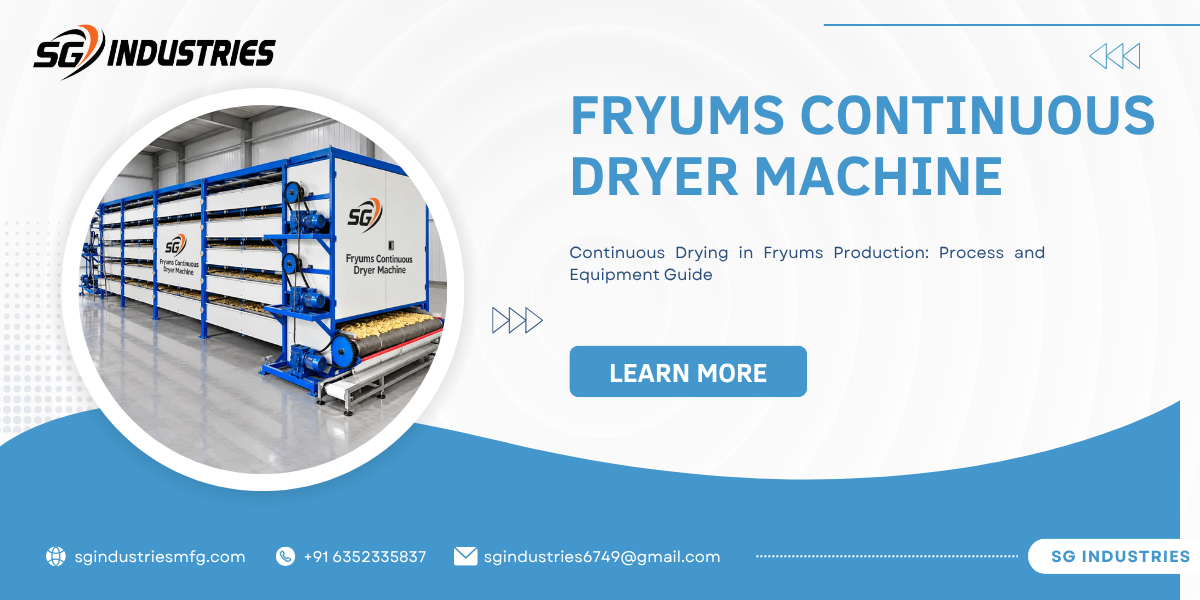
For snack-processing applications, a continuous fryums drying system may be relevant when continuous processing is required. The equipment should be selected according to the actual product and production workflow rather than assumed to be a direct replacement for a tray dryer.
Operating and Maintaining Drying Equipment
Follow the manufacturer’s operating instructions for loading, temperature settings, operating time, cleaning and routine inspection. Avoid exceeding documented operating limits or using the dryer for materials that have not been assessed for compatibility.
Maintenance should be performed by trained personnel using the required safety procedures. Record inspections, cleaning activities and any operating issues to support consistent equipment management.
Choosing the Right Industrial Tray Dryer
Before requesting a quotation, prepare details about the material, batch size, moisture-removal target, temperature requirements and intended operating schedule. Ask the supplier for the model’s technical specifications, installation requirements and recommended operating procedures.
SG Industries MFG offers industrial processing equipment. Contact the company to confirm whether a suitable tray dryer is available and request specifications for your particular application.
The best drying solution is one that matches the material and process requirements while supporting safe, repeatable operation.



 Users Today : 1
 Users This Month : 38
 Total Users : 100